Written by David Matrick, editor of CheapGasCalgary.ca. Historical October price figures are attributed to linked news reporting, and worked examples are labelled; tax and policy facts link to their official sources. See our About page for editorial standards and our disclaimer for price accuracy notes.
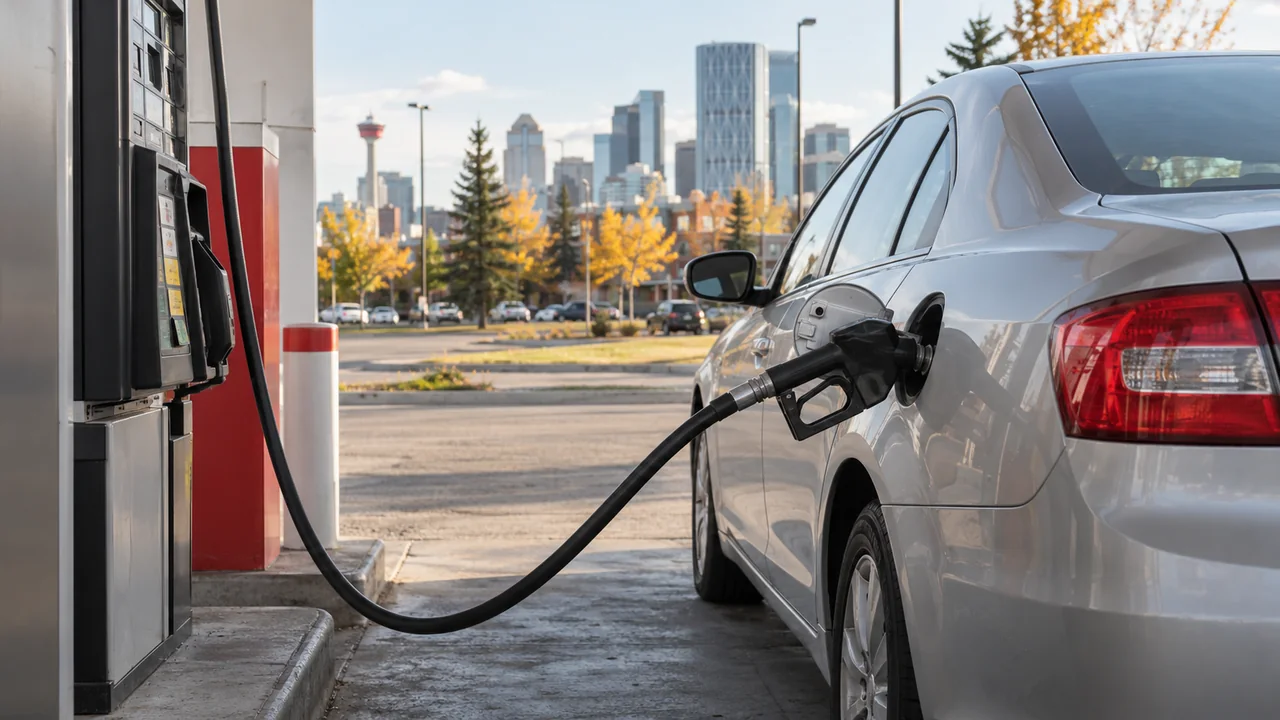
A tax cut should make a fill-up easier to afford. So when Calgary prices climbed again just days after Alberta removed its provincial fuel tax, drivers had a fair question: where did the relief go? At $1.70 a litre, even a modest 50-litre fill costs $85. A brief dip offers little comfort when the next tank is expensive again.
The tax suspension is real, but it changes only one part of the price. Alberta removed the 13¢/L provincial charge on October 1. That does not freeze wholesale fuel costs or the price a retailer charges. It also does not tell us, by itself, how much of the saving reached motorists. The provincial change runs through at least December 31, according to Alberta’s official notice.
What happened in Calgary after October 1?
CBC News reporting carried by Yahoo, published on October 7, cited GasBuddy figures showing Calgary prices at approximately 150¢/L on October 1 and 171.5¢/L on October 7. That is a 21.5¢ increase in six days. It is a dated comparison from that report, rather than a live price quote or the price at every station.
| Date | Reported change |
|---|---|
| October 1 | Provincial fuel tax suspended; Calgary price reported near 150¢/L. |
| October 7 | Calgary price reported at 171.5¢/L. |
The rebound explains the frustration. It does not establish which share came from changing wholesale costs, retail margins or the end of unusually low offers.
Which taxes were removed, and which remain?
The October change came from the Government of Alberta. Calgary City Council did not remove the provincial tax. Ottawa’s excise-tax suspension and consumer carbon-price removal are separate policies, with different start dates.
| Charge | Current position |
|---|---|
| Alberta fuel tax | 0¢/L: the 13¢ rate is suspended through at least December 31, 2026. |
| Federal fuel excise tax | 10¢/L regular gasoline rate; 0¢/L under the proposed extension, not enacted. |
| Federal consumer carbon charge | 0¢/L since April 1, 2025. |
| GST | 5%, included in the posted pump price. |
CRA documents a zero federal fuel excise rate for April 20–September 7, 2026. Extending zero to January 31, 2027, followed by half rates in February–March, remains a proposal in Bill C-38, at report stage when checked October 19. It is not enacted law. Use the calculator to compare the regular-rate and proposed-relief scenarios. The consumer carbon charge ended in April 2025; industrial carbon pricing is a separate system. Alberta’s 5% GST remains, so gasoline is not completely tax-free.
What should 13¢ off mean for your tank?
Here is an illustrative calculation, holding all other costs constant and assuming the entire provincial reduction reaches the pump. On 50 litres:
- Fuel-tax reduction: $0.13 × 50 = $6.50.
- Associated GST reduction: $6.50 × 5% = $0.325.
- Total: $6.825, or approximately $6.83 after rounding.
GST applies to the fuel price including applicable fuel taxes, as Natural Resources Canada explains. Full pass-through therefore corresponds to a 13.65¢/L reduction including GST. This is a useful benchmark, not a promise that tomorrow’s sign will be 13.65¢ below yesterday’s. A change elsewhere in the price can offset it.
For example, suppose other costs and margins rise by 20¢/L before GST while the 13¢ tax disappears. The net increase is 7¢ before GST, or 7.35¢ including it. The pump price rises despite full tax pass-through. This hypothetical example shows how the arithmetic works; it does not explain Calgary’s observed increase.
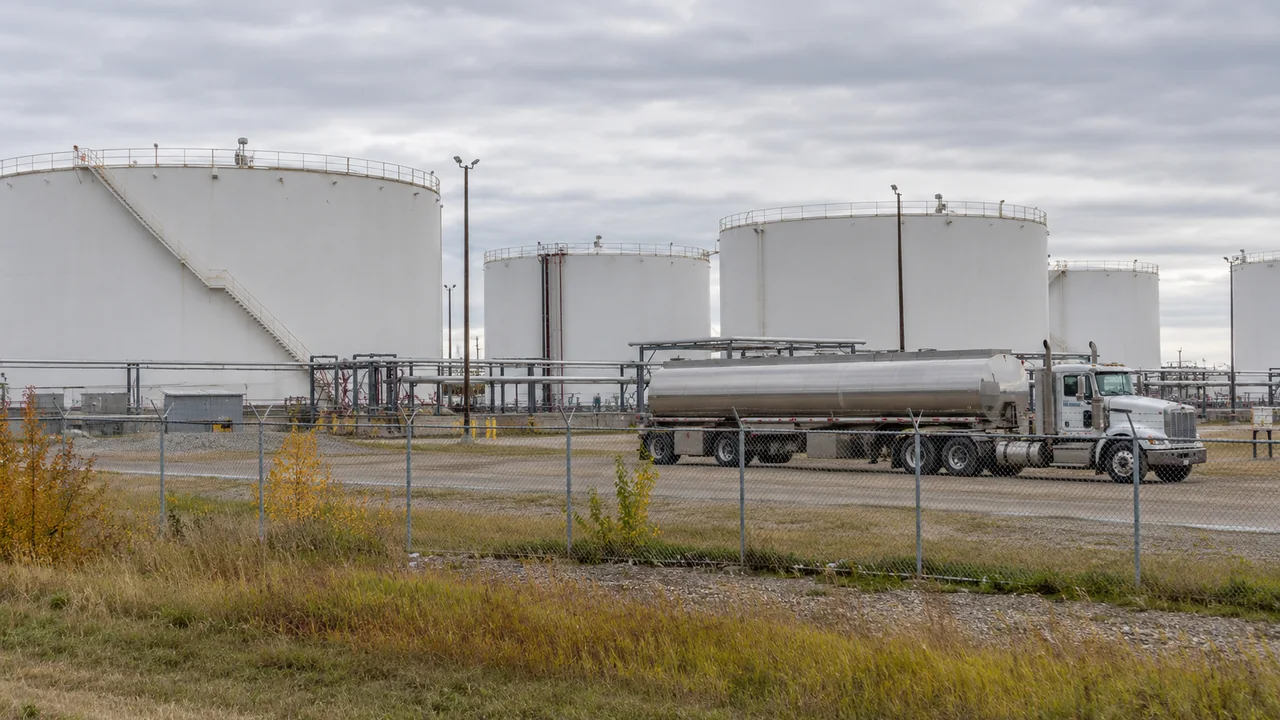
Alberta produces oil. Why can gasoline still be expensive?
Producing crude locally does not insulate drivers from the market for finished gasoline. Oil has to be refined, stored and delivered. The Competition Bureau’s supply-chain explanation identifies crude costs, refining, distribution, retail overhead and margins as contributors. Canadian wholesalers also compete with U.S. buyers; exchange-rate changes can affect what Canadian suppliers pay.
Refineries have limited capacity. Maintenance or another supply interruption can reduce the gasoline available even when crude is plentiful. Inventories help cushion those interruptions, according to the U.S. Energy Information Administration’s market explainer. These are general mechanisms, not proof of a specific Alberta outage in October. Finance Canada cited Middle East supply disruptions when announcing the federal relief extension, but that also does not quantify their contribution to Calgary’s six-day rebound.
Local price wars can make the drop and rebound look dramatic
In CTV News Calgary’s October 7 report, GasBuddy analyst Patrick De Haan attributed some unusually low offers to a local price war following the tax reduction, with stations subsequently raising prices. That is an analyst’s explanation, rather than an audit of each retailer’s costs.
Natural Resources Canada describes the broader cycle: stations compete by lowering retail margins, nearby competitors respond, and prices can later jump as retailers restore margins. Different stations need not move at the same time. A particularly cheap offer and a later citywide figure are therefore different kinds of observations.
How would we know whether the savings reached drivers?
A before-and-after pump price is a starting point. To assess pass-through, we would also need comparable wholesale prices and consistent observations: the same fuel grade, the same stations or sampling method, and the same treatment of discounts. Comparing markets without the tax change could help, provided their supply conditions and other taxes were accounted for.
Those comparisons could show whether retail margins widened as the tax fell. This article does not have the matched cost data needed to measure that. Equally, the Competition Bureau explains that similar prices or simultaneous increases alone do not establish an illegal agreement. Drivers can question the outcome without treating an unproven explanation as fact.

What Calgary drivers can do today
Compare the stations you can reach on an ordinary trip, rather than assuming every station passed along the change at the same pace. Use today’s cheapest reported Calgary prices and the price map, checking the fuel grade and report time. Older reports may no longer match the pump.
Keep the detour in proportion to the saving. An illustrative 10¢/L difference saves $5 on 50 litres. A long drive, a queue or a membership cost can reduce that advantage. Compare prices while parked, choose a convenient option, and consider a price alert for future drops.
Common questions
Did Calgary’s municipal government remove the gas tax?
No. Alberta’s provincial government suspended its 13¢-per-litre fuel tax on gasoline and diesel from October 1 through at least December 31, 2026. Federal excise-tax relief and the earlier consumer carbon-price removal are separate federal measures.
Is gasoline completely tax-free in Calgary now?
No. As checked October 19, 2026, Alberta fuel tax is suspended and the federal consumer fuel charge is zero. GST remains. The federal excise extension is proposed in Bill C-38, not enacted; the regular gasoline excise rate is 10¢/L.
How much should the provincial tax cut save on a 50-litre fill?
If the full cut reaches the pump and other costs stay unchanged, 13¢ multiplied by 50 litres is $6.50. Including the associated 5% GST reduction, the saving is approximately $6.83. That is an illustrative comparison, not a guarantee about a particular station’s price.
Does the October price rebound prove stations kept the tax savings?
No. A pump-price increase alone cannot isolate the tax cut’s effect. Wholesale costs, retail margins and local competition can change at the same time. Assessing pass-through requires comparable prices and costs over time; matching prices alone does not prove illegal coordination.
Sources and reporting notes
Researched October 10, 2026. October price figures come from the news reports linked below; they are not this site’s own historical dataset. Calculations and scenarios are illustrative. Policy dates describe the position at publication.
- Alberta Tax and Revenue Administration — October 2026 fuel-tax suspension
- Department of Finance Canada — federal excise-tax relief extension, September 2026
- Department of Finance Canada — consumer carbon-price removal, April 1, 2025
- CBC News, carried by Yahoo — Calgary price rebound, October 7, 2026
- CTV News Calgary — price swings and GasBuddy analyst explanation, October 7, 2026
- Competition Bureau — gasoline supply chain and price drivers
- Competition Bureau — what is and is not price-fixing
- Natural Resources Canada — retail competition and local price differences
- Natural Resources Canada — fuel taxes and GST treatment
- Canada Revenue Agency — Alberta’s 5% GST rate
- U.S. Energy Information Administration — gasoline supply, inventories and price fluctuations
Related: 5 ways to save on gas · Why station prices differ